Find answers to common questions


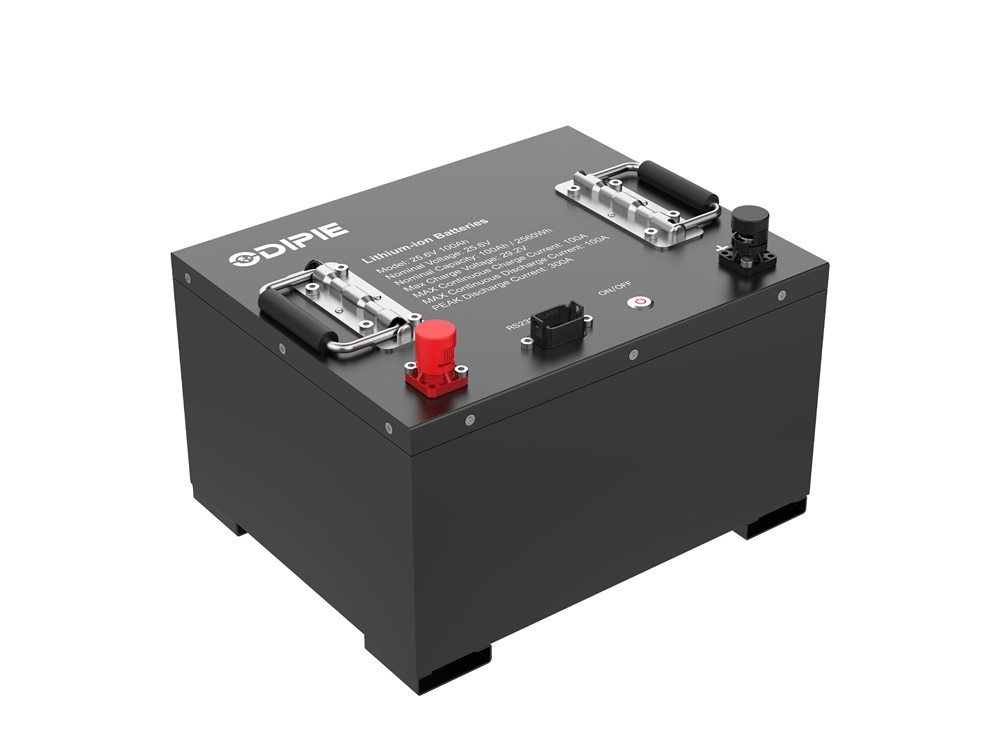
Our deep-cycle batteries are designed for solar energy storage systems, RVs and campers, Boats and marine systems, Golf carts ,e-bikes and utility vehicles, and Robotics, as well as other off-grid and backup power applications.
Yes. Our batteries are designed with IP65–IP67 protection options and can withstand vibration and shock, making them suitable for harsh environments such as RV,marine and outdoor applications.
Our batteries comply with major international standards, including UN38.3, MSDS, CE, and RoHS. Additional certifications (UL / IEC) are available for OEM projects.
Charging Temp: 0℃-55℃:
Discharge Temp: -20℃-60℃:
Storage Temp: -5℃-45℃
Uniform internal heating is an important feature of our cold-weather performance batteries, as many external heating blanket options currently available cannot sense the internal temperature of the cells and may not be completely effective at heating the battery throughout. Our system features proprietary technology that draws power from the charger itself, requiring no additional components. The entire process of heating and charging is completely seamless. Simply plug the battery into the regular LiFePO4 charger and the internal heating and monitoring system takes care of the rest.
Yes, We also provide LiFePO₄ batteries equipped with Bluetooth/Wifi connectivity / RS485 /CAN communication capabilities for advanced monitoring and integration with your system:
RS485: Used for communication with EMS or Upper Host, or remote monitoring systems.
CAN bus: For integration with vehicles or industrial applications, providing data exchange between the battery and other system components.
Bluetooth: Available on certain models, enabling users to monitor battery health, voltage, temperature, and charge & discharge status via a mobile App in real-time.
These features provide data logging, remote diagnostics, and system integration, making our batteries ideal for smart energy solutions, electric vehicles, and IoT-based systems.
The time required to fully charge a LiFePO₄ battery depends on its capacity and the charging current being applied. For an example, 100Ah Battery: 5-6 hours with a 20A charger
The time are based on typical 0.2C–0.5C charging rates. Faster charging can be achieved with higher current chargers, but it’s important to balance charging speed with battery lifespan and safety.
| System Type | Compatibility | Notes / Settings |
| Solar PV System | ✅ Yes | Use LiFePO₄-compatible charge controller; e.g. 12V battery : set 14.4V charge / 13.6V float |
| MPPT Controller | ✅ Yes | Set to LiFePO₄ or user-defined mode |
| Pure Sine Wave Inverter | ✅ Yes | Stable DC supply; check voltage match |
| Hybrid Inverter (Solar + Battery) | ✅ Yes | For best results, use with RS485/CAN communication |
| Off-grid System | ✅ Yes | Ideal for deep cycle and long-life applications |
| System Voltage | Nominal Voltage (V) | Recommended Charge Voltage (CC/CV) | Low Voltage Cut-off (Discharge Protection) | Recommended Charge Current |
| 12V (4S) | 12.8V | 14.4V - 14.6V | 10V |
0.2C – 0.5C (e.g. 20A – 50A for 100Ah) |
| 24V (8S) | 25.6V | 28.8V -29.2V | 20V | 0.2C – 0.5C |
| 36V (12S) | 38.4V | 43.2V -43.8V | 30V | 0.2C – 0.5C |
| 48V (16S) | 51.2V | 57.6V -58.4V | 40 | 0.2C – 0.5C |
| 60V (20S) | 64.0V | 7 2.0V-73V | 50V | 0.2C – 0.5C |
| 72V (24S) | 76.8V | 86.4 V-87.6V | 60V | 0.2C – 0.5C |
For best performance, we recommend using a battery voltage matched LiFePO4 charger or MPPT solar controller.
The weight and dimensions vary with the battery model and capacity.
E.g. 12V 100Ah — approx. 10 kg, size 260 × 168 × 209 mm
24V 100Ah — approx. 20 kg, size 384 × 194 × 255 mm
48V 100Ah — approx. 38 kg, size 520 × 240 × 220 mm
All batteries feature a compact, lightweight case design for easy installation in RVs, boats, and solar systems
Our LiFePO₄ batteries are built with Grade A prismatic cells from reputable brands such as EVE, REPT, Sunwoda,etc. — all well-known for their high consistency, long cycle life, and safety performance.
We select the cell brand based on battery model, capacity, and application requirements, ensuring the best balance of reliability and cost for each project.
For capacity 50Ah and above, We are normally using Grade A Prismatic cell.
For smaller capacity below 50Ah, we generally uses Grade A Cylindrical cell.

Built Safe • Built to Last
Odipie offers one-stop professional services in lithium battery production, ensuring quality, cost-effectiveness, and sustainable solutions across various industries.